
Japanese gymnastics legend Kohei Uchimura proudly raised his hands and held up six fingers after winning his sixth-consecutive World all-around title at the World Artistic Gymnastics Championships last week.
“I wanted to show that just one hand is not enough (to count the number of World titles that I won).” Uchimura said. His words clearly shows his pride on remaining as the greatest gymnast of all time ever since he got his first World all-around title in 2009. Ever since, he has successfully defended his winning streak and has not suffered any losses in the individual all-around World competitions (including the 2012 Summer Olympics). That’s probably because he was endowed with all the traits required to become the “king of gymnastics”.

Mitsuo Tsukahara, the Vice President of the Japanese Gymnastics Association, who owns a total of five Olympic gold medals, said, “There used to be quite a large number of champions about 170 centimeters."
He was pertaining to, for example, Vitaly Venediktovich Scherbo (169cm), a former Belarusian artistic gymnast who holds a record total of 23 World Championship medals. In comparison, Uchimura is 162 centimeters tall, giving the overall impression that he has a small body frame with bulging muscles.
He was pertaining to, for example, Vitaly Venediktovich Scherbo (169cm), a former Belarusian artistic gymnast who holds a record total of 23 World Championship medals. In comparison, Uchimura is 162 centimeters tall, giving the overall impression that he has a small body frame with bulging muscles.
Hiroyuki Tomita, a member of International Gymnastic Federation’s (FIG) technical committee, said, "There are body types that are advantageous to compete in individual all-around world championships."
During the time of Scherbo, the gymnasts were focusing on improving the precision of their routines to attain the “Perfect 10” score. However, since the gymnastics scoring system was changed in 2006, gymnasts started competing for a combination of D-score (difficulty score), which is based on the difficulty of the gymnast’s exercise and performance and E-score (Execution score) which evaluates the preciseness and beauty of the performance. That means, the more difficult the routine is, the better the score the gymnast could obtain.

On the individual all-around competitions, the athletes are required to use their muscles in order to perform their routines. Male gymnasts, especially, use those bulging muscles in gymnastics events like the floor exercise, and the vault, which requires jumping power, horizontal bars that requires a strong core muscle, as well as the rings, which requires brute strength. The harder the technique the gymnast use, the greater the burden their bodies would suffer, increasing the likelihood of injury.
Despite being the qualifying event for the 2016 Summer Olympics in Rio De Janeiro, the top athletes of Brazil and U.S. failed to make it to the 2015 World Artistic Gymnastics Championships in Glasgow, because of existing physical injuries. Uchimura, on the other hand, was gifted with a physique that was more resistant from suffering the burdens on joints and muscles. As a matter of fact, “King Kohei” has never suffered any major injuries.
Japanese Gymnastics Federation’s Vice President Tsukahara said. “What gymnasts of today need is muscle endurance that is necessary to perform many difficult techniques.”
The gymnast’s muscle endurance can be measured by observing their landing – the technique that the athletes are at the end of their performances – in the events such as horizontal bars. Considering that the gymnasts are using difficult routines (which tests the limits of their physical abilities) in the competitions that they take part in – they tend to get exhausted at the end of their performances. For that reason, only a small number of athletes were able to perform their routines as precise as it needs to be. On the other hand, mainly because of his excellent muscle endurance, Uchimura was able to hold his body in any position that he wants to.
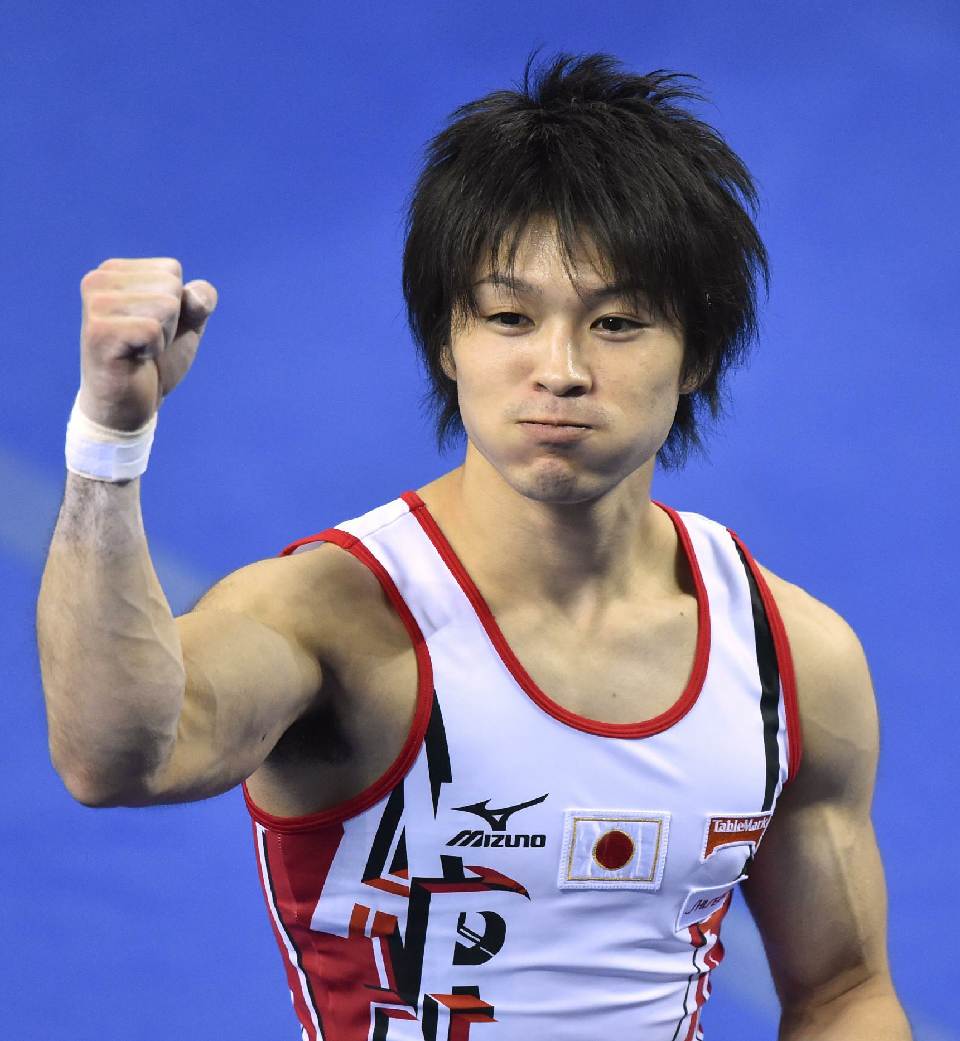
Even after obtaining his third Olympic qualification, Uchimura said, "The Olympics are a different dimension. They won't go the same way as the world championships." Aside from his instinctive qualities, Uchimura also possesses an inquisitive mind to master the sport of gymnastics since he is more familiar with the struggles and hardships in gymnastics more than anyone else. Due to his amazing qualities, no one can tell if there is a limit on how far the “king of gymnastics” can go.
To get more informative posts and news related to the sport of gymnastics, you should like and subscribe to our official Facebook Page. Learn gymnastics for kids with us, enroll now at Bianka Panova Sport and Art Academy and obtain the highest quality of training and education.


