Showing posts with label research. Show all posts

Monday, September 12, 2016

Ballet, Dancing Affects Emotional Sensitivity, Study Suggests

According to a recent study, dancers are proven to be more empathetic and emotionally sensitive compared to the rest of us. 

According to the research published recently in the Journal of Experimental Psychology: Human Perception and Performance, short video clips were presented to two sets of people: a group of professional ballet dancers, and a group of subjects with no dance experience. The video clips were silent, black and white, just a few seconds long, and the faces of the dancers were blurred, which made the facial expressions unrecognizable. With no other factors to base on other than the shapes of the moving bodies, the two sets of control group were asked to rate their emotional response base on what they saw on the short footage, whether they find them to be happy or sad.

ballet dance

The emotional response of the control groups were measured by the electrodes worn on their fingertips, which demonstrated that the ballet dancers had a much stronger emotional reactions on the footage compared to the other control group.

“The very cool thing about this study is that the dancers not only recognized the emotions better, but their bodies would also response more sensitively to the displayed emotional movements,” said Julia Christensen, the lead author of the research. “Dancers’ bodies differentiated between different emotions that were expressed in the clips, where the controls didn’t.”

Apparently, this is probably what we would expect from someone who has expertise in what they’re watching. That exactly is the point, Christensen pointed out.

What does this imply? It basically suggests that practicing the physical expressions made the dancers more sensitive to them. And this indicates one interesting thing, emotional sensitivity can be trained. In other words, there is a possibility that our bodies can be trained to be more empathetic through dance and other physical activities. 
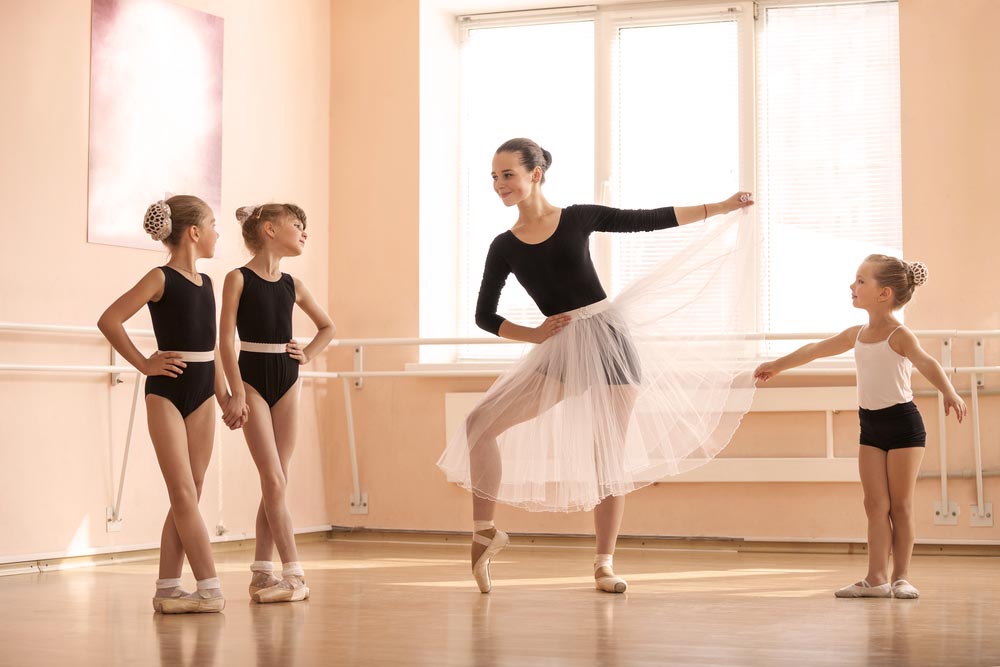
dance ballet

Christensen believes that the study shows “why everyone should dance. Our research indicates that dance training might be a way to make you more aware of emotions.”

“You could even hypothesize that dance makes you more empathetic,” she says, “because it seems that you learn to react automatically and more sensitively to others’ expressions.” But this still needs to be studied further, she added.

Read more articles about sports and fitness by following our official blogs and social media websites. 
Learn gymnastics for kids from the best; enroll today at Bianka Panova Sport and Art Academy and experience the highest quality of training and education! :)

Tuesday, May 17, 2016

Rhythmic Gymnastics Exercises Can Improve Child’s Creativity, Study Suggests

Based on a research, engaging in a motor improvisation program can positively affect the motor creativity of the young children. According to the research, the young children who participated in the study experienced an improvement in their motor creativity (fluency, originality, expansion, flexibility).

The study included a small number of girls whose currently in the 3rd grade. Out of the 44 girls who were initially chosen to take part in the study, only a total of 20 girls were carried to participate as the final experimental sample. These girls were asked to participate in a motor improvisation program, primarily using exercises and apparatuses from the rhythmic gymnastics.


Throughout the study, the equipments and instruments that were used are forms for recording information and measurements of the research group, a restameter to measure the subjects’ height in centimeter, a medical balance to determine the subject’s weight in kilograms, a stopwatch, rhythmic gymnastics apparatuses (ball, rope, hoop), a laptop and CDs, a set of sterile plastic cups and glass tubes and a video camera.

The training program was divided into three parts – the preliminary part, which lasts for 20 minutes; the main part, which has a total duration of 60 minutes; and the final part, which lasts for around ten minutes.

The preliminary part consists of changing the outfit and checking the attendance of the participants (5 minutes are allotted for this). The 15 minutes that was left are used to perform relaxation exercises (from the 1st to the 6th lessons) and warm up exercises for all the parts of the body from the 7th to 12th lessons.

The main part of the training program consists of different exercises that included the exercises used in rhythmic gymnastics training. Lastly, the final part, which lasts for ten minutes, are comprised of calming activities such as mini games.

The training program lasted for 8 weeks, wherein the subjects have to attend two training sessions a week. Each session lasts for 90 minutes. The program was applied on Mondays and Wednesdays, from 2 in the afternoon until 3:30 pm. 


After the training program has ended, the participants were evaluated and measured. The results were compared to the measurements they got before the training program has begun. The researchers saw a significant difference in the pre and post measurements, seeing a positive improvement in the post measurements in variables of fluency, expansion, flexibility and total motor creativity.

The results were rather impressive, and it successfully proved the hypothesis of the researchers which states that the motor improvisation program positively affects the motor creativity of the children. 

If you will think about it, it is not surprising that the training program boosted the creativity of the participants. The training program they used included some activities from the rhythmic exercises, which is a sport that primarily uses creativity and imagination in order to be properly performed. So, by regularly taking part in rhythmic exercises, the motor creativity of the participants were positively affected.

By performing rhythmic gymnastics on a regular basis, it is not only your physical capabilities that are enhanced, but also the level of your creativity.

So, what are you waiting for, take part in a rhythmic gymnastics program and enjoy all the benefits that the sport can bring to you. Experience an excellent kind of gymnastics training experience, enroll at Bianka Panova Sport and Art Academy today :) Come and learn gymnastics for kids with us

Wednesday, December 16, 2015

Get Fit While You're Young!


Today, we will discuss the importance of getting fit and healthy while you’re young. Eating healthy and getting in shape at a young age is more than just boosting your attractiveness. Let us provide you a handful of reasons to start your fitness journey right now!

You’ll Develop Healthy Habits

There’s a great deal of truth with the saying that ‘any habits formed during childhood are often carried through their adulthood’. Starting to practice healthy habits like eating healthy, getting enough sleep and exercise, and taking part in physical activities such as gymnastics for kids while you’re young gets you on the right track early on. These types of healthy practices can help you avoid suffering from certain illnesses and diseases like high blood pressure and heart disease in your adulthood.
Forming good habits while you’re young “will be easier than if you’re trying to develop them when you’re in your 30s, 40s, or 50s,” says John Rowley, a certified personal trainer. “At that point you may have to change your whole life around to implement them. Another reason to adopt healthy habits early on is so you can apply them to other areas of your life. That’s what Arnold Schwarzenegger did. The tools he learned in the gym helped build his movie career, and eventually got him into government.” 

Being Physically Fit Leaves Better Impression


We might not always admit it, but most of the time, we judge people based on their looks. Say for example, you see someone with a slumped shoulders and a big tummy. Do you see him as someone who is hardworking and confident? Most likely, no.

Building a leaner and healthier body gets you prepared for the future. Your appearance is the first thing that your potential employer will notice, and having a fit body will make an impression that you’re disciplined, and is able to get the work done.

“Whether you’re in a suit or plumber’s uniform, being lean, fit, and in shape gives off the impression that you’re disciplined, hard-working, and intelligent,” said Rowley “If you’re in your 20s and just getting out of school, it helps your career by telling people that you have the ability to get the job done.”

Being Healthy Makes You More Productive

According to a research published in the journal ‘Physiology & Behavior’, having bad eating habits such as consuming too much sugary and processed foods leads to a lower energy level, leaving the subjects feeling tired and lazy. Also, according to a study published in the journal ‘Population Health Management’, any unhealthy habits outside of work have a direct impact on the employees’ productivity loss.

So, if you want to be successful, whether it be in life or in gymnastics, you need to keep yourself healthy to maintain high levels of energy and focus. Unhealthy habits obviously won’t get you there.

You’ll Develop Higher Levels of Confidence

Eating healthy and exercising regularly has a direct impact on boosting your confidence level. Simply performing basic exercises such as walking or running for 20-30 minutes is enough to reduce stress and anxiety, which will positively impact your mood. Also, being fit and in a good shape makes you more attractive, directly affecting your sense of self-worth.
“Typically, psychology will follow physiology,” Rowley says. “If you’re not feeling confident, start moving your body in a confident way. And when you’re fit with strong muscles, you move with confidence. Again, it’s about taking the lessons learned inside the gym and using them in other areas of their lives.” 

You’ll Learn to Set Goals

As mentioned in our other article, any kind of sport, especially gymnastics, is not something that you can rush. Being an active participant of these kinds of sports teaches you that unless you have superhuman powers, you need to set smaller, attainable goals to be able to effectively reach your goals. 

“Those structured goals that you use in the gym where you’re doing something on a regular basis to get a predictable result can be a training routine for life,” he says. “Find habits that are working for others, whether it’s a schedule or training routine, and use them yourself. It’s a very effective way to achieve success.” 
Those are just some of the benefits you can get if you’ll start your fitness journey at an early age. It is never too late to become physically fit! Learn gymnastics for kids with us. Enroll today at Bianka Panova Sport and Art Academy and experience a high quality gymnastics training :)
Like our official Facebook page for more gymnastics-related posts!


Wednesday, October 7, 2015

Ballerinas are Resistant to Dizziness, Research Says

It turns out that, ballerinas aren’t just a master of graceful movements and fancy footwork, they also have a “pirouette-proof” brains.

A study has determined the significant differences in their brain structures that allow them to avoid the feeling of light-headedness whenever they’re doing a set of endless pirouettes.
It strongly suggest that ballet dancers’ years of training have allowed their brains to develop a way to suppress the signals that are transmitted by the balance system in their inner ear, which would otherwise make them feel dizzy and may lead to loss of balance.

This finding, which was published in the Cerebral Cortex journal, could promote a better treatment for the sufferers of chronic dizziness, a problem that affects one in four people at one point in their lives.

Usually, the sensation of dizziness comes from the vestibular organs in the inner ear. This fluid-filled structure becomes aware of the rotation of one’s head with the use of the tiny hairs -- which can detect the movement of the fluid.

The fluid in the vestibular system continues to move even after a series of rapid spinning, which gives the sensation like you are still rotating.

Practitioners of ballet are able to execute a series of pirouettes without having the feeling of light-headedness. The findings proved that ballet dancers doesn’t just rely on “spotting” – a technique used by dancers while performing a series of dance turns, which involves the rapid movement of the head in order to fix their eyes on the same spot. 

Twenty-nine female ballerinas and twenty female rowers of the same age and fitness level were recruited by the researchers at the Imperial College London. The participants were spun around while sitting in a chair in a dark room. They are instructed to turn a handle in time with how fast they felt like they were still turning around after they had stopped.
The researchers observed and measured the volunteers’ eye reflexes triggered by the signals coming from the vestibular organs. Subsequently, they have also analyzed the subjects’ brain structure through the use of MRI scans. The ballet dancers’ eye reflexes and their perception of spinning have diminished faster compared to the rowers

The Scientific American explained the reason behind it. “They were able to show that dancers had a decrease in the vestibular-ocular reflex. They moved their eyes less as they whipped around…And they also felt the turning less than controls. More importantly, the dancers sense of turning, and the vestibular-ocular reflex, were UNCOUPLED. They were not related to each other. So even though their eyes were moving in the reflex, they didn’t feel it!”

According to Dr Barry Seemungal, a neurologist who researches the brain mechanisms of dizziness and its treatment “Dizziness, which is the feeling that we are moving when in fact we are still, is a common problem.”

“I see a lot of patients who have suffered from dizziness for a long time. Ballet dancers seem to be able to train themselves not to get dizzy, so we wondered whether we could use the same principles to help our patients.” He continued.
The brain scans showed significant dissimilarities in the brain of the two sets of participants. The differences are found in two parts of their brain: an area in the cerebellum where sensory input from the vestibular organs is processed and in the cerebral cortex, which is in charge for the sensation of dizziness. The area in the cerebellum was smaller in the brain of the dancers.

Dr. Seemungal believes that this is because the brains of ballerinas have adopted not to use their vestibular systems, and instead rely on highly coordinated pre-programmed movements.

Seemungal stated that “It’s not useful for a ballet dancer to feel dizzy or off balance.”

“Their brains adapt over years of training to suppress that input. Consequently, the signal going to the brain areas responsible for perception of dizziness in the cerebral cortex is reduced, making dancers resistant to feeling dizzy. If we can target that same brain area or monitor it in patients with chronic dizziness, we can begin to understand how to treat them better.” 

Looking for more related news about ballet and gymnastics? Then you should like the official Facebook Page of Bianka Panova Academy and get supplied with lots of informative posts about ballet and gymnastics for kids. Also, check the official website of Bianka Panova Academy to see the various kinds of programs that the school can offer for you 