Showing posts with label dance. Show all posts

Monday, September 12, 2016

Ballet, Dancing Affects Emotional Sensitivity, Study Suggests

According to a recent study, dancers are proven to be more empathetic and emotionally sensitive compared to the rest of us. 

According to the research published recently in the Journal of Experimental Psychology: Human Perception and Performance, short video clips were presented to two sets of people: a group of professional ballet dancers, and a group of subjects with no dance experience. The video clips were silent, black and white, just a few seconds long, and the faces of the dancers were blurred, which made the facial expressions unrecognizable. With no other factors to base on other than the shapes of the moving bodies, the two sets of control group were asked to rate their emotional response base on what they saw on the short footage, whether they find them to be happy or sad.

ballet dance

The emotional response of the control groups were measured by the electrodes worn on their fingertips, which demonstrated that the ballet dancers had a much stronger emotional reactions on the footage compared to the other control group.

“The very cool thing about this study is that the dancers not only recognized the emotions better, but their bodies would also response more sensitively to the displayed emotional movements,” said Julia Christensen, the lead author of the research. “Dancers’ bodies differentiated between different emotions that were expressed in the clips, where the controls didn’t.”

Apparently, this is probably what we would expect from someone who has expertise in what they’re watching. That exactly is the point, Christensen pointed out.

What does this imply? It basically suggests that practicing the physical expressions made the dancers more sensitive to them. And this indicates one interesting thing, emotional sensitivity can be trained. In other words, there is a possibility that our bodies can be trained to be more empathetic through dance and other physical activities. 
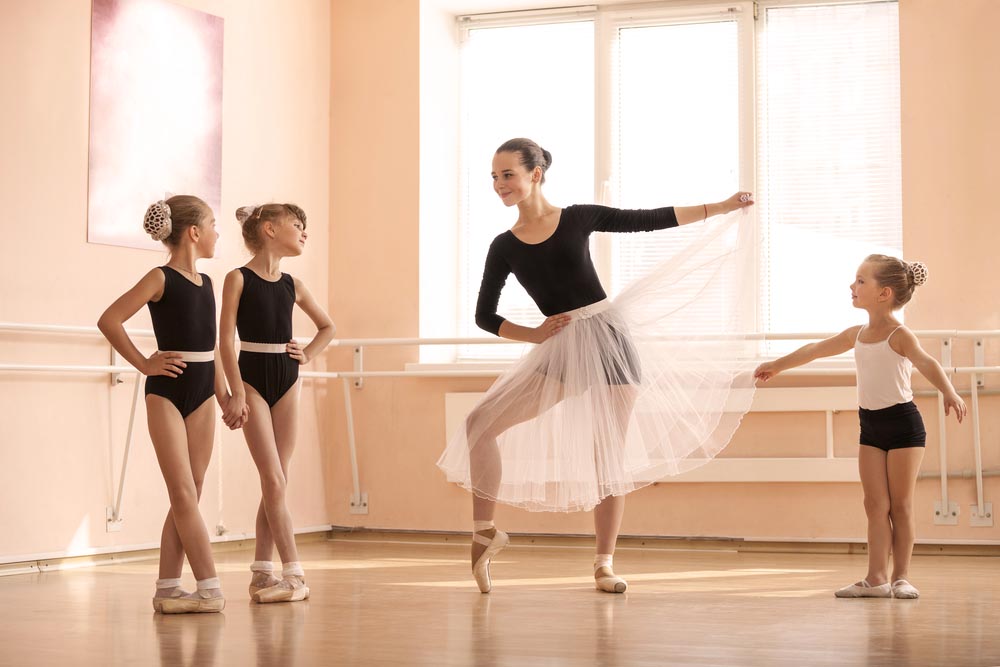
dance ballet

Christensen believes that the study shows “why everyone should dance. Our research indicates that dance training might be a way to make you more aware of emotions.”

“You could even hypothesize that dance makes you more empathetic,” she says, “because it seems that you learn to react automatically and more sensitively to others’ expressions.” But this still needs to be studied further, she added.

Read more articles about sports and fitness by following our official blogs and social media websites. 
Learn gymnastics for kids from the best; enroll today at Bianka Panova Sport and Art Academy and experience the highest quality of training and education! :)

Monday, December 7, 2015

American Rhythmic Gymnast Makes History in the Sport

When Laura Zeng gets ready to compete, the “small-yet-terrible” American gymnast takes it very seriously. As she approaches the stage, her eyes stern and lips pursed and she walks with full confidence and swag. Then, she lifts up her right hand to salute the judges and the audience as she takes her position on the carpet. 
         
After that, she starts to widen her eyes and display the beauty of her smile, revealing the energy and excitement of all her performances, from a smooth and flawless performance with the hoops to a lively samba with the clubs.
Laura Zeng
Zeng is currently acknowledged as the best American rhythmic gymnast, with a lot of remarkable achievements at the young age of 16. Zeng secured the eight spot in the all-around event finals of the 2015 World Rhythmic Gymnastics Championships last September, the best all-around finish for an American gymnast. Her historic world all-around finish earned her country a spot in the 2016 Summer Olympics in Rio de Janeiro.

The USA rhythmic gymnastics team also secured an Olympic spot and will be the first American rhythmic team to make it to the Olympics.  Zeng and her other teammates trains at North Shore Rhythmic Gymnastics Center in Deerfield.

The administrators of the USA gymnastics hope that the successes attained by Laura Zeng and the American gymnastics team in the recently held World Championships is the start of USA’s dominance in a sport long dominated by Eastern European gymnasts. During her training, Zeng said that to think that she had really earned a spot in the Olympics was “overwhelming”.

"I knew I had all these opportunities at this competition to reach those goals. I knew it was all on me," Zeng said. "So to be able to not let myself down and really go for it, it made me proud."

Artistic gymnastics is insanely famous among American audiences, mainly because of the world-renowned figures such as Olga Korbut, Nadia Comaneci and Mary Lou Retton. In comparison, rhythmic gymnastics barely possesses the same popularity and is a sport that is often misunderstood.
"When you say you do rhythmic gymnastics, people block the 'rhythmic' part," said Kris Shaldybin, 18, of Highwood, a member of the U.S. team. "They're like, 'Oh, do you like the beam?'"
USA Gymnastics at the recently held Rhythmic World Championships

For those who don’t know:


Rhythmic gymnastics is a sport that uses hoop, ball, clubs and ribbon as the apparatus in their routines. (The use of rope was discontinued for seniors). The athletes earn points by combining balances, leaps and jumps, pivot turns, dance steps and basic acrobatics while maneuvering, tossing and catching the equipment with the different parts of their body. Each performance can earn up to 20 points, and they are scored based on execution and the difficulty of their routine. Rhythmic gymnastics athletes can compete as individuals or as a group.

In a group performance, each of the five team members will hold an apparatus, synchronize their routines and toss their apparatus with each other. The different teams will perform two routines with varying combinations of apparatus. During the Olympic season, groups will perform with five ribbons in one routine, and with two hoops and six clubs in the other.

"At first glance, people just think it's twirling with a ribbon," Zeng said. "But I don't think they understand how hard it is to get that routine done. It takes so much work to master the equipment, to make it a part of you, and to be able to do all those elements with musicality. It's so many things happening at once."
Laura Zeng ribbon routine
Zeng was originally studying Chinese dancing, but was later introduced to rhythmic gymnastics by her friend when she was just 7 years old.

"I was drawn to the performance aspect, as I was a dancer and I loved performing for the audience," Zeng said. "And the musicality and being able to express myself while also being able to do equipment handling also really appealed to me."

Feed your mind with our daily informative posts. Read more gymnastics-related articles and posts by liking our official Facebook Page.

Learn gymnastics for kids with us. Enroll today at Bianka Panova Sport and Art Academy and experience a fun and world class training experience.

Wednesday, September 2, 2015

How to Start Doing Gymnastics (Part 3)

This would be the third and the last part of this article. The fact that you have reached the last part of this article is an indication of your intense passion for this kind of sport. So, let us now proceed on discussing the last part of this article.

PART 3: STAYING SAFE AND HEALTHY


DON’T FORGET TO WARM-UP AND STRETCH


Don’t! Just don’t. Before doing any kind of intense workout, you need to warm-up and stretch your muscles first. Make sure that you include a set of warm-up and stretching exercises in your daily workout. Without doing so, you are risking of injuring yourself.

  • Always remember, warming up and stretching are two different things. It is often a mistake of some people to use stretching exercises as their “warm-up” exercise. However, you have to keep in mind that you should NEVER do stretching exercises while your muscles are cold, as doing so can lead to injuries. 
  • Always do cardio exercises such as walking in the treadmill or jumping jacks to warm your muscles up and prepare them for a more intense workout.

KNOW WHAT YOU ARE CAPABLE OF


As a gymnast, you should be responsible to take note of your own progress. You should know what you can do and what you are not capable of doing. It is not a good idea to perform a backflip in front of many people on a hard surface if you haven’t mastered the skill yet. Do not be overconfident, as it might lead to serious trouble.


WORK YOUR WAY UP SLOWLY


Gymnastics is not a kind of sport that you can master overnight. Don’t rush! You need to learn how to be realistic with your goals. It would be impossible for you to learn backflips on the first day and then master it on the next day. Becoming a champion doesn’t happen overnight, so you need to be patient!

WEAR PROTECTIVE GEAR


Protective gears are made for – guess what? For your protection! You probably don’t want to injure yourself while trying to practice complicated types of tricks, do you?


WATCH YOUR SLEEPING AND EATING HABITS


Gymnastics is a physically-demanding sport, so in order to perform at your best; you need to take a good care of your body. You have to make sure that your body is getting all the nutrition it needs, as well as getting enough rest after a day of hardwork.

  • Make sure you are getting enough sleep. When you’re tired, it would be impossible for you to perform at your 100% capability.
  • Also, make sure that you are supplying your body with the proper amount of nutrition. Eat foods that contain a large amount of high-quality protein such as meat, fish, eggs and milk. You should also include lots of fruits and veggies in your diet in order for you to stay healthy. Remember, STAY AWAY from processed foods!

Being a gymnast sure is a challenging life to live, but it is also a fun and satisfying one. If you are really passionate with this kind of sport, the day will come; you will see yourself successful in the field of gymnastics. Isn’t it a nice thing to hear? :)

However, to be a great gymnast, you need to find a great school that can provide you with the most appropriate kind of training. Should you be looking for a school that teaches gymnastics for kids, you can try and visit Bianka Panova Academy :)

Tuesday, September 1, 2015

How to Start Doing Gymnastics (Part 2)

As mentioned in the first part of this article, gymnastics is a sport that involves a lot of physical activities. It is one of the most fun kind of sport you can indulge yourself in.

Being on the second part of the article, I can assume that you are really interested to start doing gymnastics. So, brace yourself and let’s continue to discuss the things you need to do in order to get started with gymnastics.

PART 2: TAKING IT TO THE NEXT LEVEL


COMMUNICATE WITH YOUR COACH/INSTRUCTOR


As you make progress, it would just make sense if your instructor will encourage you to take your training to the next level. However, there might be times where you might feel that you’re not yet ready or you want to take it to a different direction.


The good news is you can actually tell your concerns to your coach. Don’t be afraid or shy that you might disappoint your coach if you disagree with his terms. Remember, in gymnastics, it is very important to be open with your coach. This kind of sport involves terrifying stunts, and you don’t want to see yourself doing back flips if you don’t feel comfortable doing so, right?

PRACTICE DOING BENDS


Aside from the standard cartwheel and handstand, one of the first skills that you will learn in a gymnastics class is bends. Bends is the foundation of countless other complicated yet exciting tricks. Without learning how to do bends, you probably won’t be able to do flips either. So it is very important to practice doing your bends every once in a while.


PROCEED ON DOING JUMPS


As you make progress, you will then proceed on doing different kinds of jump. When you combine jumps with bends, you will be able to do flips. That just means that you are moving to the next step of your gymnastics goals.

START DOING FLIPS


After getting used on doing jumps and bends, you are now ready to proceed on doing flips. Being able to do flips is the dream of every gymnast. This is where you will feel like you’re getting more and more advanced.


Before doing any kinds of flips, always make sure that you are being guided by your coach. Also, you should practice doing flips at the gym and make sure you have a spotter and a soft foam or cushion that you can land on. Once you get more advanced then you will be able to perform it in front of other people.

START GETTING MORE ADVANCED


Once you have learned the basics of bends, flips and jumping, you can now start to do more advanced kind of tricks and stunts. You can also combine all the things that you have learned in order to perform a more complicated and impressive kinds of tricks.

BEGIN COMPETING


Once you are advanced enough and are already confident with your gymnastics skills, then you are ready to compete with other gymnast. This is where you will further improve your gymnastics skills. You will also be able to show other gymnasts what you are made of. Let them know that you trained hard enough to be right where you are now!

Also, by competing, you will be able to show other people – gymnast or not, that nothing is impossible if you will just work hard for it.  You will be able to inspire other people that everyone is capable of achieving what they are dreaming for, if they are really passionate enough on trying to achieve it.

But wait, that’s not yet the end of the steps you need in order to get successful in the field of gymnastics. Stay tuned for the last part of this article (click this link: http://biankapanovaacademy.blogspot.com/2015/09/how-to-start-doing-gymnastics-part-3.html). By this time, you already know how fun and interesting gymnastics is. You might want to encourage your child, or a younger sibling to attend a school that teaches gymnastics for kids. If I am right, you can check Bianka Panova Academy out and see what we can offer for you :)

Monday, August 31, 2015

How to Start Doing Gymnastics (Part 1)

Gymnastics is a kind of sport that involves a lot of physical activity. It requires a proper amount of fitness in order to be done by an individual properly. Gymnastics can be one of the most fun activity a person can commit too. Not only that, it is also a great exercise, which can improve your fitness on intense levels.

Perhaps you are now starting to get interested with gymnastics and may be wondering how you can start on learning the sport. Below are some of the steps you can follow in order to get started.


(Note: This article will be divided into three parts, and the link for the next part of the article will be provided at the end of this article)

PART 1: GETTING STARTED


FIND A NEARBY SCHOOL THAT TEACHES GYMNASTICS


Gymnastics isn’t a kind of sport that you can just learn all by yourself. Yes, you can watch tutorials and educational videos, and you can also read articles about gymnastics in order to learn some of the basics of the sport. However, those things alone are not enough to get to an advanced level. It would be best if you will train with the guidance of a trained professional.

GET STARTED AT YOUR LEVEL


Always remember, any kind of sport, especially gymnastics, is not something that you can rush. You have to take it one step at a time. You cannot just do backflips and somersault at the start of your program. Also, it would be impossible for you to do splits if you are not yet flexible enough. You should inform your teacher of your current fitness level so he/she can adjust the difficulty of your training depending on your current ability and skill set.

NEVER EVER FORGET TO IMPROVE YOUR FLEXIBILITY


If there’s a thing that you could do on your own, it is working on your own flexibility. Never forget to do stretching exercises at your free time in order to improve your flexibility. Being flexible is super important if you want to be good at gymnastics as a lack of flexibility will hinder you from doing certain gymnastic stunts.


Most people thought that being flexible is just being able to kick higher and do splits effortlessly. However, you should never forget to improve the flexibility of your shoulders and especially your back as it will be super important when it comes to gymnastics.

TRAIN YOUR MUSCLES AND -- REST!


Aside from flexibility, getting strong muscles is also an important part of being a good gymnast. Being able to lift your own body is a must for some of the gymnastics stunts so you should also focus on improving your strength.


Start improving your strength by doing some bodyweight exercises like push-ups, pull-ups and squats. Once you built a good foundation, you can start to move forward on lifting weights. However, if you do begin weight training, never forget to take a day or two off from the gym to let your muscles heal themselves. Resting is as important as training as that is the time where your muscles are growing. Plus, you deserve that rest day after an intense workout!

GET COMFORTABLE OF BEING UNCOMFORTABLE


Always remember these things: if you are too comfortable of doing any tricks, without feeling any kind of fear, there is a high chance that you are going to hurt yourself. Plus being too comfortable will make your training sessions boring. However, if you are too uncomfortable and scared to the point that you’re shaking and hesitating before doing a trick, you are likely to fail and won’t get the trick done. So, you need to learn to be comfortable being uncomfortable – meaning you have to accept if you’re feeling a little nervous. Being a little nervous will make you aware of what you’re doing and will prevent you from being overconfident.

Those are just some of the steps you need in order to get started on learning gymnastics. Stay tuned for the next part of this article (click this link: http://biankapanovaacademy.blogspot.com/2015/09/how-to-start-doing-gymnastics-part-2.html). Should you be looking for a school that teaches gymnastics for kids, I am very glad to tell you that the search is over. Visit the official website of Bianka Panova Academy to learn more about the school and what it can offer for you :)

Thursday, August 27, 2015

Breaking the “Gymnastics is a Women’s Sport” Idea Using its History

A lot of people know what gymnastics is, and it has been a long while since the wide-known sport existed. Almost everyone knows basic information on gymnastics, whether it may be popularly called as “being flexible” or “a supernatural talent,” people have an idea what it is. However, only few know the international sport’s history and background. It’s time to cut off the stereotypical idea that gymnastics is a woman’s sport and reevaluate your concept as you go through its timeline.

Gymnastics originated from Ancient Greece and was initially intended for military training. Yes, military training for soldiers to get ready for war. The skills and strengths in performing this sport were considered as great assets for those who are battling in war-fields.
In the late eighteenth century, pioneer physical educators Johann GutsMuths and Friedrich Ludwig Jahn created exercises using apparatuses for young men and led to what is considered modern gymnastics. Don Francisco Ondeano was the first person who introduced educative gymnastics in France and he promoted the use of parallel bars, high bar and rings on international competitions.

In 1881, the Federation of International Gymnastics was found in Liege, and by the end of 19th century, men’s gymnastics competition became broad and viral, and was eventually included in the 1896’s first modern Olympic Games.

During the 1920’s, women organized and participated in gymnastics events. The first Women’s Olympic Competition was held in Amsterdam in 1928. Olympic Games apparatus and events for men and women had been systematized in modern format and uniform grading structures in 1954.

Girolamo Mercuiriale wrote Le Arte Gymnastica in 1956 which consisted studies of ancients’ attitudes toward exercise, diet, hygiene, and using natural methods for curing diseases. Le Arte Gymnastica also expounded the principles of physical therapy and is noted as the first sports medicine book.

Superb and outstanding gymnasts can be now found on every continent, although it may seem like women are dominating the sport, people should never forget that it’s men who founded and started all of this.


Gymnastics is a great sport and can be well performed by everyone. Mass appreciation doesn’t always equate to something good, whereas the typical thought of gymnastics is a women’s sport, doesn’t mean it is. The sport is unique and extraordinary which can be performed by those whose passionate are immense as they want to be. Whatever sport you are in to, you have to be brave, persevered and disciplined, and these attitudes don’t just come from women, they can come from everyone.

POINTS TO REMEMBER:
·         Gymnastics were originally made for military trading in order for men who fight in wars to enhance their battling skills
·         The first women Olympic Games were held in Amsterdam, 1928
·         It’s not just the flexibility that matters in Gymnastics, but above all is the discipline
·         It’s not a women’s sport because anybody is welcome to do it

Bianka Panova Academy offers various kinds of lessons related to ballet and gymnastics for kids. To learn more about what the company could offer for you, check out our official website.

Thursday, August 20, 2015

The Benefits of Attending Gymnastics Class for Young Children

Gymnastics is a kind of sport that young children can get involved in, and they may continue to do so until their teenage and college years. While most kids use their talent and expertise in gymnastics in order to be a competitive gymnast and participate in competitions, other children get involved in the sport just because they love to learn new things and they are seeking to develop their fitness level.


With today’s alarming obesity rate on the rise, because kids nowadays are starting to prefer playing video games and watching television rather than playing outdoors, letting your child attend a gymnastics class can offer them numerous physical and social benefits.

PHYSICAL BENEFITS

Regardless of the ability or age of your children, letting them attend a gymnastics class will enable them to enjoy a lot of physical benefits. Participating in gymnastics class will help them increase strength, flexibility, endurance and coordination.  The kids will also learn how to balance on the beam, and they will be able to enhance their power when they vault. Gymnastics will also help them become physically active, which will make it easier for them to stay in shape and get fit and healthy.

Encouraging your children to engage in sports like gymnastics, which incorporates moderate and vigorous physical activities, is very critical for them, especially at a young age, as any habits formed during childhood are often carried by the child through their adulthood.

SOCIAL BENEFITS

Allowing your children to participate in a sport like gymnastics can also help them further improve their social and communication skills. In a gymnastics class, they will be required to listen, follow commands and instructions, and also be respectful of each other. They will also have to socialize with their classmates and from there, they will learn how to make friends.

CHARACTER BENEFITS

Gymnastics lessons can also enhance the character of your child. Participating in the lessons teaches them discipline, determination, courage and self-confidence. It can also help them learn from their mistakes. Also, it encourages them to persevere in times when they face troubles in learning a skill. Goal setting will also be a natural part of your children’s life, as being involved in a sport like gymnastics requires you to set goals in order to keep track of your progress.

It was proven that kids who are involved in physical activities such as sports are rarely involved in bad habits such as alcohol, drugs, and smoking.


So with all the benefits that your child can get from a school that teaches gymnastics for kids, aren’t you now interested in looking for the right academy for your child? Bianka Panova Academy offers a great opportunity for your child to learn and develop their skills in the most fun way. So what are you waiting for? Check out our website (http://biankapanovaacademy.com.sg) or visit us personally to learn more about us.

Tuesday, August 18, 2015

History of Ballet

Ballet has become more popular in the recent years, but for most people, it still remains a mystical world of movements and expressions which are confusing for everyone and only understood by the most serious Balletomane. Today, let us learn about the origin of ballet so we can have more ideas on how it became popular all around the world.

HISTORY OF BALLET

Ballet became popular in the late 15th century Renaissance court culture of Italy. You might not believe it, but the ballet was originally known as a “dance interpretation” of fencing. It was further enhanced and developed in the French court in the 17th century, the time of Louis XIV. This is the reason of the use of French vocabulary in ballet.

In the 18th century, despite the great reforms of Noverre (Jean-Georges Noverre, a French dancer and balletmaster, and the creator of ballet d’action), the popularity of ballet in France became lower after 1830, though it was still continued in other countries such as Denmark, Italy and Russia. On the eve of the World War I, the ballet was reintroduced to Western Europe by a Russian company owned by Sergei Diaghilev named Ballets Russes, and it became influential all over the world.

The company owned by Diaghilev became a popular destination for most of the trained dancers from Russia, in order to escape the famine and unrest which was caused by the Russian Revolution. Numerous choreographic and stylistic modifications and innovations were brought by these dancers that had been flourishing under the czars back to their place of origin.

The ballet became more prominent and continued to advance in the 20th century. It has strongly influenced the broader concert dance. For example, in the U.S., a choreographer named George Balanchine created his signature style “neoclassical ballet". Some of the developments and innovations that followed includes contemporary ballet and post-structural ballet, which was developed by William Forsythe in Germany.

Ballet is a formalized type of performative dance, and was performed starting in the 16th and 17th century French courts. It was further innovated and enhanced in England, Italy and Russia as a concert dance form. The ballet dancers that time were not as skilled compared to the dancers we have today. Since then, ballet has become a highly technical form of dance, even having its own vocabulary. The dance was commonly known to be performed in sync with a classical music. Recent developments and innovations consist of expressionist ballet, and even include some elements of modern dance.

Today, it is being taught all-around the world in different ballet schools. Should you happen to be looking for an academy that teaches ballet and gymnastics for kids, you can try and visit Bianka Panova Academy.